Two legends,
two discoveries,
one coffee shop
The concept of CBRB Karaganda is based on two legends that at first glance seem to be far apart, but in essence speak of the same thing: an accidental and amazing discovery that changed the course of events.
The first legend comes from the Ethiopian shepherd Kaldi, who lived in the 9th century AD. According to the legend, he noticed that his goats became surprisingly alert and active after eating red berries from wild bushes. Thanks to his observation, the world learned about the invigorating effect of coffee. Thus, the wild berry became a global symbol of energy, uniting people around the globe over a cup of the aromatic drink.
The second legend is about the shepherd Appak Baizhanov, from the 19th century. In 1833, he discovered "black stones" that burned in a fire, thus opening the way to coal in Karaganda. His discovery didn't just warm a nomad's fire — it gave a powerful impetus to the development of an entire region, transforming Karaganda into the industrial heart of Kazakhstan.
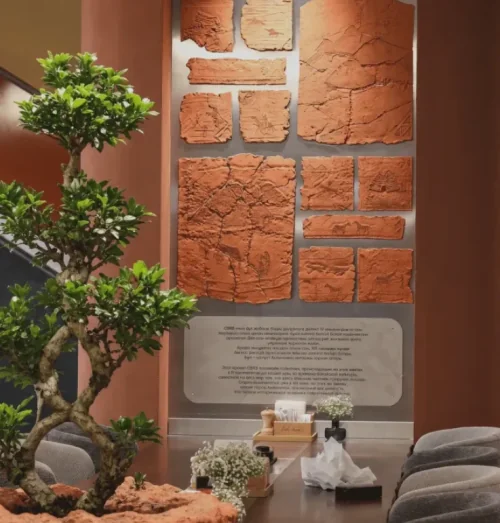
Two legends, two cultures, two heroes — an Ethiopian shepherd and a Karaganda shepherd — meet in the CBRB Karaganda space. In the center of the installation, between the two parts of the composition, information about each is engraved in two languages — Kazakh and Russian. This is a tribute to both the global coffee epic and the local history of the region.
CBRB KARAGANDA legends
Karaganda is a city traditionally associated with coal, mines, and industrial might. Here, in the heart of the Kazakh steppe, a place has emerged where ancient legends come to life in the interior, and coffee becomes more than just a drink, but a symbol of discovery. CBRB Karaganda is a stylized coffee production and brewing factory, where every detail is imbued with meaning, and the doors are open to every guest.
The vision behind this project is to create not just another coffee shop, but a place that will become part of the city's identity. The interior speaks to guests through respect for tradition, craftsmanship, and the boldness of discovery.
The color of sunrise
and sunset
A unique signature color was chosen for this project. It's not just a shade, but a feeling. Pastel purple is a frozen moment that every city dweller encounters at sunrise and sunset. This color can only be seen in the early morning hours of sunrise and with the last rays of sunset.
It's everywhere: in the Weroast FLOW system lighting, in the engravings on the roasting machine, in the degassing area, and even on the lot description signs. The signature color greets guests with their first cup of coffee in the morning and immerses them in an atmosphere of comfort, tranquility, and warmth at sunset.
Project's signature color
Artistic design
At CBRB KARAGANDA, every area is carefully designed, and many of them are not only practical but also artistically valuable.
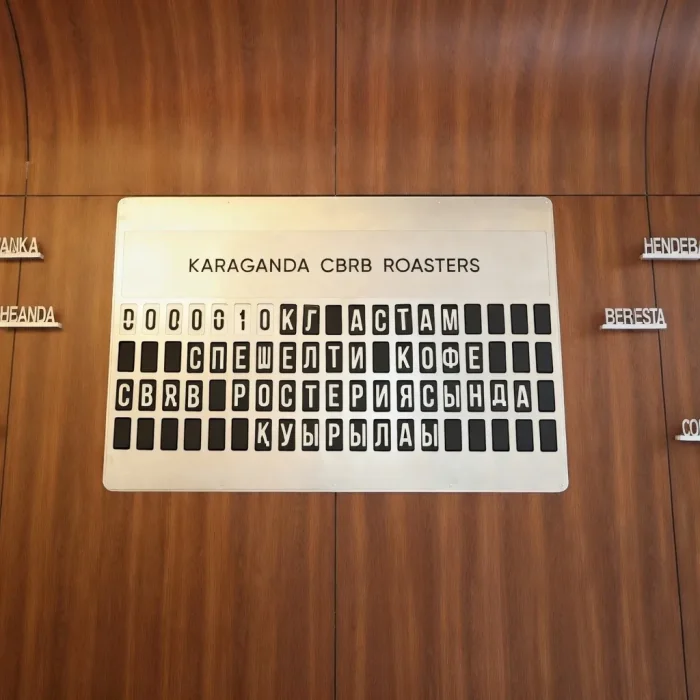
CBRB Karaganda features an installation reminiscent of an airport board—an installation dedicated to coffee geography and production. It's executed in a monochrome palette — strict and graphic, without any bright accents.
This installation combines two functions. First, it counts the kilograms of coffee roasted since the project's inception. Second, it references the geography of coffee: on the wall nearby are listed the countries from which the green beans originate, including the lots used in the project.
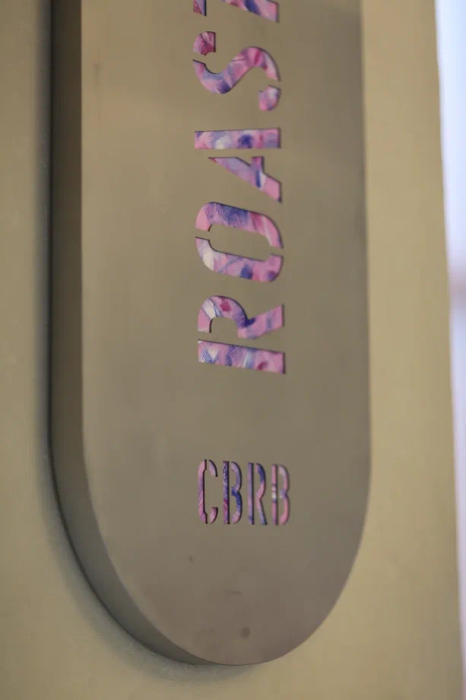
The word "ROASTERS" is a professional marker in coffee culture: the project doesn't just serve coffee, it roasts it itself. A key feature is that the roasting machine is located not in the factory, but inside the room, in full view of guests. Projects like this are rare in the world.
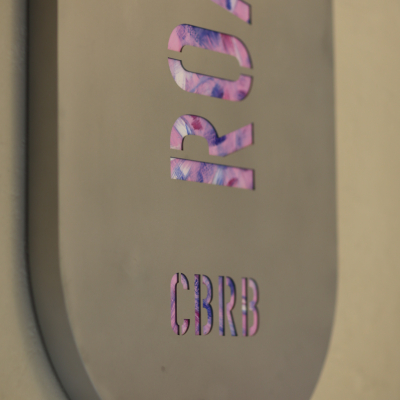
The acronym CBRB stands for Coffee Boom Roasters & Bakery, and the "ROASTERS CBRB" sign at the entrance confirms that the roasting takes place on-site. In this project, the word is painted on metal in oil paint, in a sunset-and-dawn purple-pink palette that echoes the overall concept of the space.
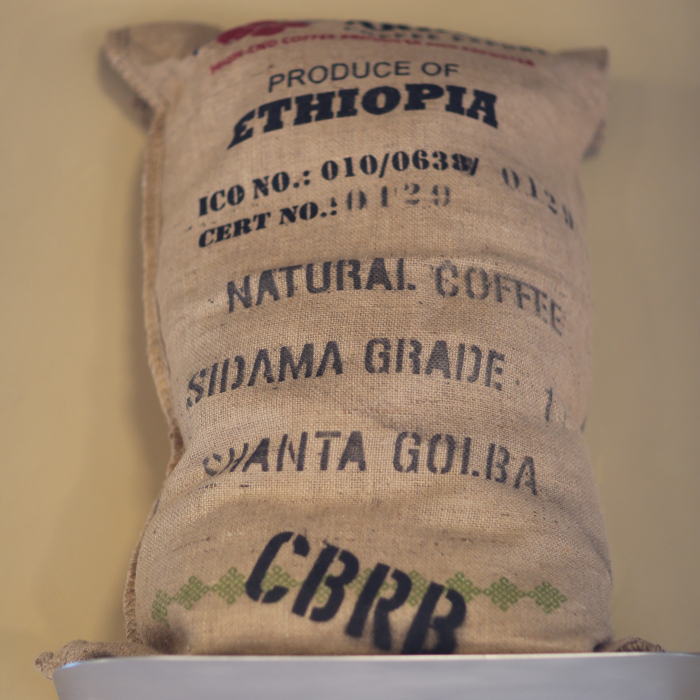
Each CBRB project features an installation featuring a real jute bag — the kind in which coffee arrives from the plantation. In Karaganda, one has also taken up residence, allowing visitors to see the packaging as it crosses the ocean in containers.
The bag weighs 30 kg, typical of rare farm-produced Specialty microlots. Inside, there's a GrainPro liner, protecting the grain from moisture and temperature fluctuations throughout its journey. This lot is actually used in the project.
The shelf beneath the bag is engraved with the bean's journey in two languages: how the coffee is transported in jute bags, and how the cultivation and careful roasting provide warmth, just as coal warms cities. This is how the CBRB team imbued the interior with meaning, history, and a spirit of discovery.
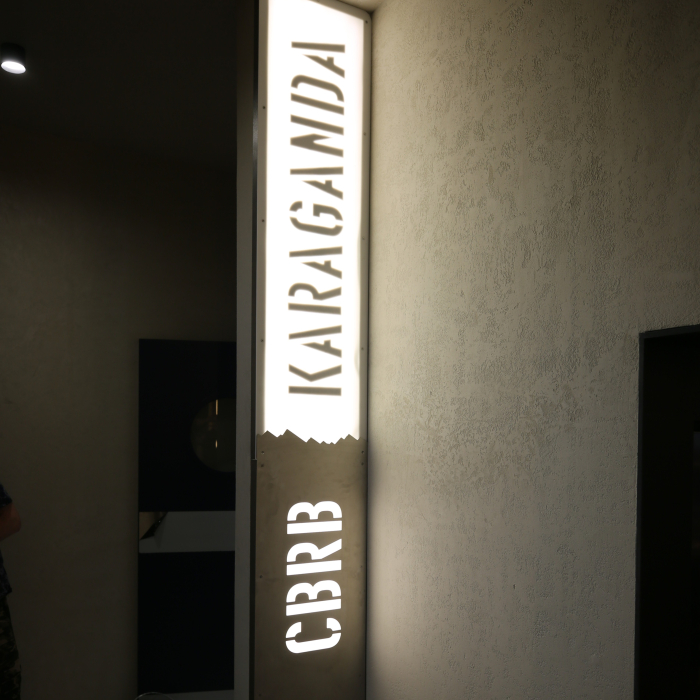
The interior of CBRB KARAGANDA features a light console where the city's name is read not as text, but as a soft silhouette. The letters appear as shadows: the metal behind the plastic creates a blurred outline, evoking morning haze or sunset light, when outlines become blurred.
The silhouette of the letters evokes the local landscape — the rolling hills and gently sloping inclines characteristic of the Karaganda uplands. This topography is reflected almost imperceptibly in the design, becoming a subtle signifier of the place without unnecessary pretension.
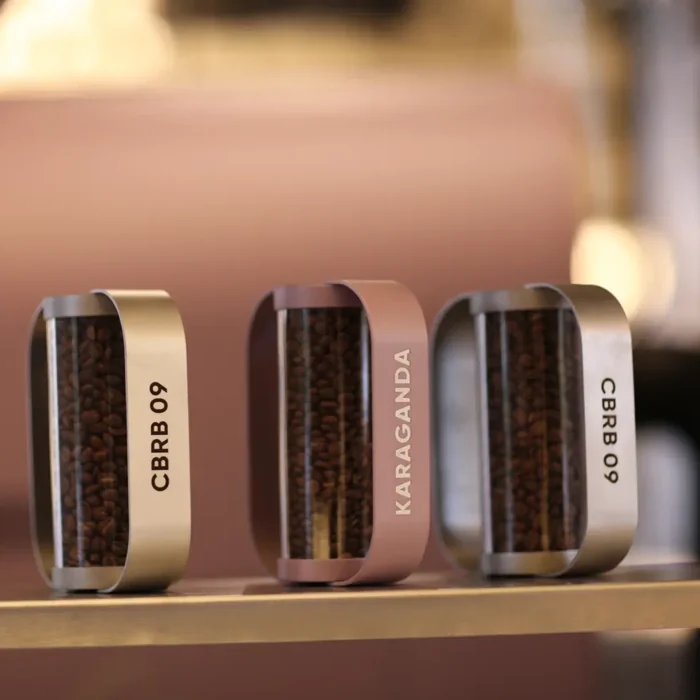
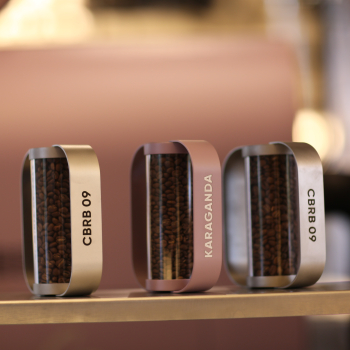
The CBRB KARAGANDA project features a detail that begs to be picked up. It's a series of lanterns, a stylized version of the very mountain lamps used by pioneers, explorers, and those who discovered the earth's depths. Karaganda is a region that has become more than just a coal granary for Kazakhstan, but a symbol of the entire country's industrial character. The coal industry is familiar to everyone here, and this image is carefully transferred to the interior of the coffee project.
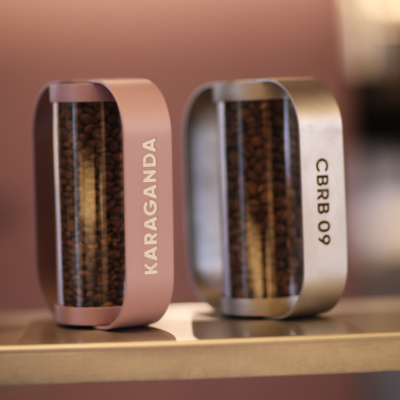
The lanterns come in three colors: black metal, reminiscent of miner's tools, and two shades of the project's signature color. Each is engraved with the region code: CBRB 09. The lanterns are filled with roasted coffee beans, thus preserving not only the warmth but also the essence of the project itself.
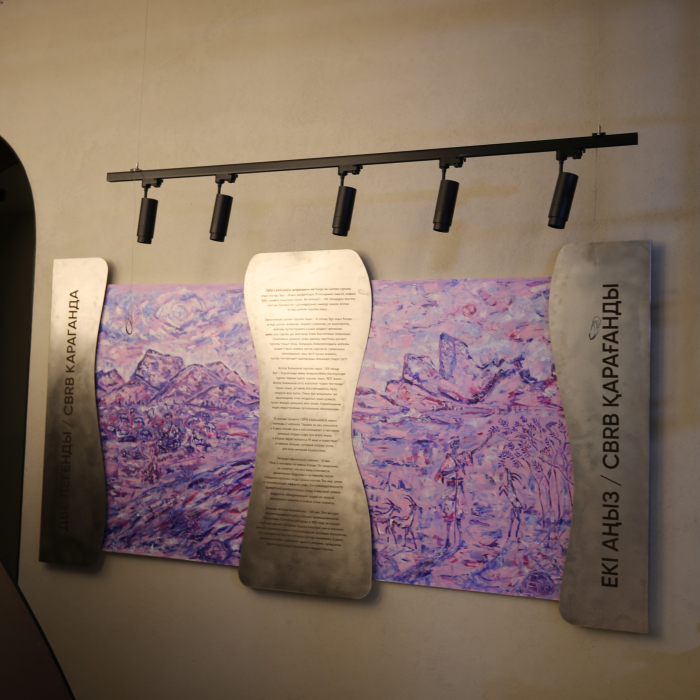
In the center of the installation, between the two parts of the composition, information about two legends is engraved in two languages - Kazakh and Russian.
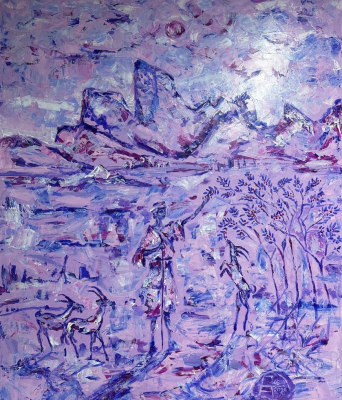
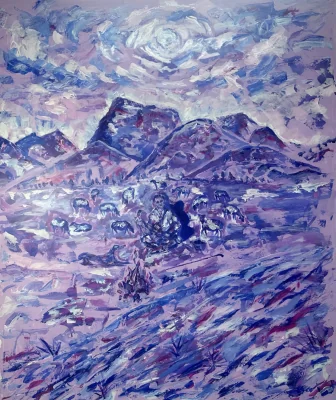
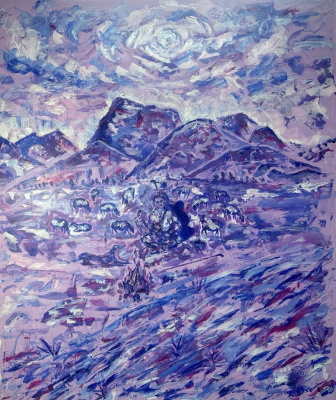
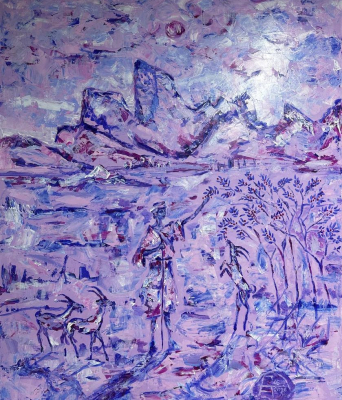
The installation is complemented by two paintings, executed in an expressive manner with a predominance of lilac-pink shades.
The left painting depicts a mountain and steppe landscape with moving human figures, symbolizing the journey, search, and discovery — a reference to the legend of the origin of coffee. The right work continues the theme of earth and space, evoking the Karaganda steppe and the story of Appak Baizhanov, who discovered coal in Karaganda.
Openness without borders
CBRB in Karaganda is an innovative project combining an open kitchen area and a roasting area with a "no boards" concept. There are very few projects in the world where you can see an open coffee roasting process. Even in the largest cities, these areas are separated from guests by glass. There are no boundaries here — guests can be fully involved in the process, witnessing every stage — from storing green coffee to roasting and preparing it in a variety of ways.
The heart of the project —
Weroast Roasting machine
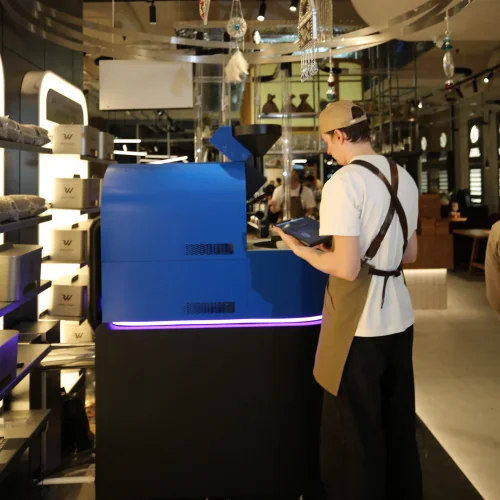
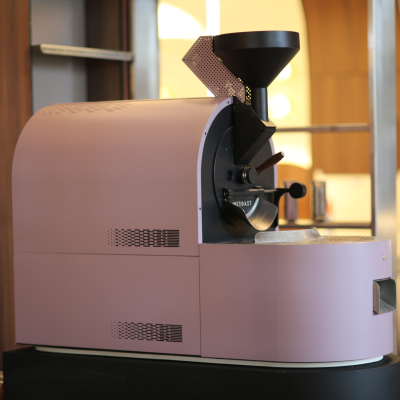
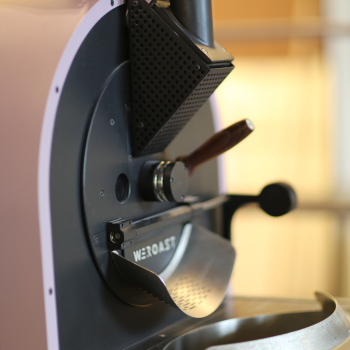
The roasting machine is the central element of the CBRB KARAGANDA roasting area. It's crafted in the project's signature purple — a deep, rich hue that echoes the sunset-and-sunrise theme of the space's concept. The project's simple name, CB, is engraved on one side of the roaster, along with the region code, 09.
This unique design was developed specifically by Weroast Unique Design team for the CBRB KARAGANDA project. The color palette, engraving placement, and application technique are unique to CBRB's projects. The roasting machine not only serves its functional purpose but also becomes the roasting area's main art piece, attracting guests' attention and emphasizing the uniqueness of the space. Its color and minimalist engraving make it a symbol of CBRB KARAGANDA's exclusivity.
Levitating coffee:
Weroast FLOW
One of the most impressive interior details of CBRB KARAGANDA is the WEROAST FLOW system, captivating both in its engineering and aesthetics. This pneumatic system transports coffee beans through pipes, styled to resemble factory equipment. Four transport lines were designed for the CBRB KARAGANDA project: three of them transport coffee to the bar area (brew zone), while the fourth is a closed loop that returns the beans.
Transport routes run throughout the first floor, turning the bean delivery process into a true perfomance. They immerse you in the atmosphere of a live production facility while simultaneously solving a practical problem: delivering freshly roasted coffee from the roasting area directly to the bar. Thus, WEROAST FLOW serves three purposes: as a functional installation, an art object, and a striking interior feature that invariably attracts attention.
Taste lab:
Weroast FROZ
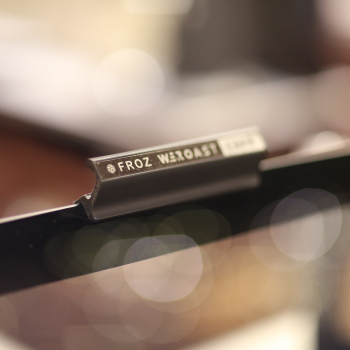
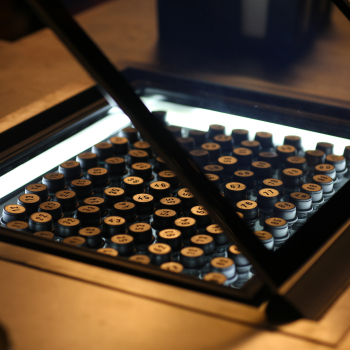
At CBRB KARAGANDA, V60 filter coffee is brewed from frozen beans. Weroast Froz freezers are used for storage. The system includes a chamber, cards for labeling lots, coffee beans, engraving for custom roasting profiles.
The signs for each lot are made in the CBRB KARAGANDA color scheme —shades of sunset and sunrise, a violet-pink palette. The holders echo these tones to ensure easy navigation for guests.
How does it work? Immediately after degassing, the coffee is packaged in glass tubes, with a check valve placed on top of each tube. This releases carbon dioxide while blocking oxygen. The tubes are then placed in a freezer at -20°C. Under these conditions, the bean cells age 16 times more slowly than at room temperature — the reactions within are slowed, and the flavor and aroma remain virtually intact.
Bean storage
After roasting, coffee needs to rest. The project includes a degassing zone for this purpose — a space where the freshly roasted beans stabilize, releasing their flavor and aroma. The duration of this stage varies from a few hours to a day, depending on the variety, roast level, and the profile the roastmaster is aiming for.
To identify green and roasted coffee beans, the project created special signs featuring mountain views, in purple tones, and with borders. They bear the inscriptions "green coffee" and "roasted coffee" in Russian and Kazakh.
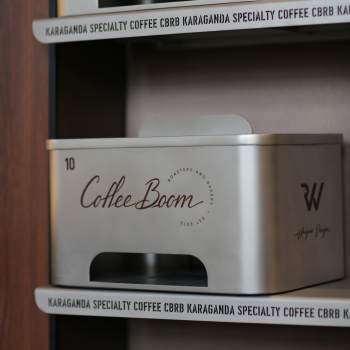
Weroast stainless steel containers are used for storing coffee beans. This material does not react with the coffee, preserving its quality. Each container has its own number, and the accounting system tracks the specific lot contained within and how long it takes to degas.
Every cup warms, and every legend comes to life
CBRB Karaganda is more than just a coffee shop. It's a place where ancient legends meet modern technology, where the color of dawn becomes part of the decor, and the journey of the coffee bean — from plantation to cup — becomes a captivating journey. Here, coffee is no longer just a drink but a story to be seen, heard, and felt.